
You want to hide your location online — but which tool should you actually use? A fake GPS app and a VPN both deal with location, yet they solve completely different problems. Confusing the two can leave you exposed in ways you didn’t expect. In this guide, we break down the fake GPS vs VPN difference clearly: how each works, what it actually hides, and when you need one over the other.
What Is a Fake GPS App?
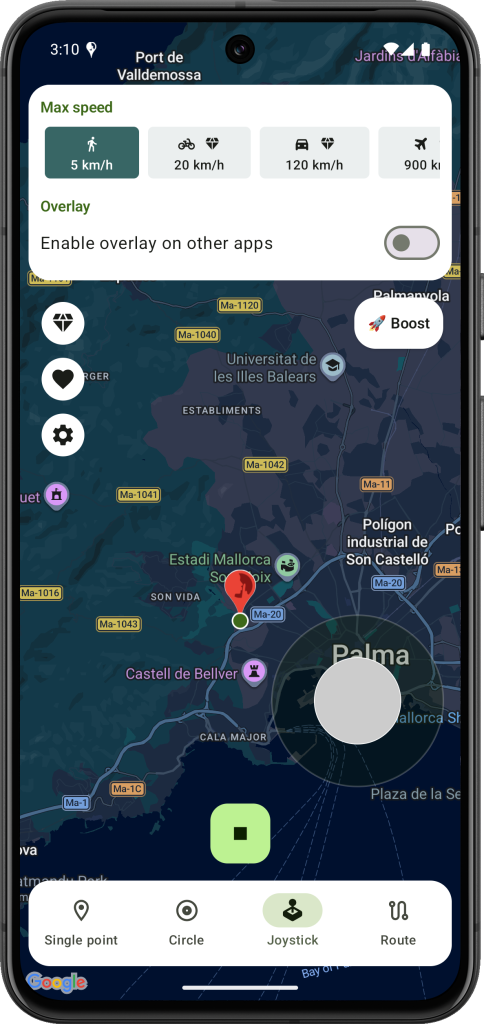
A fake GPS app — also called a GPS spoofer — tricks your device’s location services into reporting a false position. Instead of broadcasting your real coordinates, your phone tells apps that you’re somewhere else entirely.
This works at the operating system level. On Android, most fake GPS apps use developer options to set a « mock location. » On iOS, it typically requires additional software or a connected computer.
What a fake GPS affects:
- Map apps (Google Maps, Apple Maps, Waze)
- Location-based games (Pokémon GO, Ingress)
- Dating apps that show nearby users (Tinder, Bumble)
- Delivery and ride-hailing apps
- Any app that requests access to your device’s GPS coordinates
Critically, a fake GPS app does not touch your internet connection or IP address. If an app or website determines your location from your IP rather than your GPS, spoofing won’t help at all.
What Is a VPN?
A VPN (Virtual Private Network) works at the network level, not the device level. It routes your internet traffic through a server in a location of your choice, replacing your real IP address with one that belongs to that server.
When a website or online service checks where you are, it sees the VPN server’s location — not your actual one.
What a VPN affects:
- Your visible IP address across all apps and browsers
- Geo-restricted content on streaming platforms (Netflix, BBC iPlayer, Disney+)
- Your encrypted traffic on public Wi-Fi
- Region-locked websites and services
- Targeted advertising based on IP geolocation
A VPN does not affect your device’s GPS coordinates. So if an app reads your GPS directly rather than your IP, a VPN alone won’t spoof your physical location.
Fake GPS vs VPN: Key Differences Side by Side
Understanding the distinction comes down to one core question: what are you hiding, and from whom?
| Fake GPS | VPN | |
|---|---|---|
| What it hides | GPS/device coordinates | IP address |
| Works on | Location-based apps | All internet traffic |
| Encryption | No | Yes |
| Bypasses geo-blocks | Partially | Yes, reliably |
| Privacy on Wi-Fi | No | Yes |
| Use case | App-level location spoofing | Broad online privacy |
A fake GPS is surgical — it targets specific apps that rely on your device’s physical coordinates. A VPN is broader — it protects and reroutes everything you do online.
Neither tool is inherently superior. They solve different problems, and in some cases, you may actually need both at the same time. For example, a user wanting to access a geo-locked gaming server while also spoofing their in-game location would need a VPN for the connection and a GPS spoofer for the app-level coordinates.
When to Use a Fake GPS vs a VPN
Choosing the right tool comes down to your specific goal:
Use a fake GPS app when:
- You want to change your location in a specific mobile app (game, dating app, delivery service)
- The app reads GPS coordinates directly, not your IP address
- You don’t need encryption or broader privacy protection
Use a VPN when:
- You want to access streaming content locked to another country
- You need to protect your browsing on public Wi-Fi
- You want to mask your IP address from websites, advertisers, and trackers
- You’re working remotely and need to connect to a private corporate network
Use both when:
- You need to spoof your GPS in a mobile app and route your traffic through a specific country’s server simultaneously
One important caveat: always check the terms of service for any platform you use with these tools. Some services explicitly prohibit location spoofing and may ban accounts found using it.
Conclusion
The fake GPS vs VPN debate isn’t really a competition — they’re complementary tools that operate at different layers. A fake GPS manipulates what your device tells apps about your physical coordinates. A VPN changes what the internet sees as your online location via your IP address. Knowing which one you need (or whether you need both) saves you time and protects you more effectively.
Ready to take control of your digital privacy? Explore our guides on the best VPNs for streaming and the top-rated location spoofer apps for Android and iOS — and make an informed choice today.